
Why Are Thermowells Important? A Complete Guide to Temperature Measurement Protection

When measuring temperature in industrial, laboratory, food processing, pharmaceutical, and sanitary applications, the temperature sensor is only one part of the system. A thermowell plays an important role in protecting the sensor while allowing accurate and reliable temperature measurement.
Thermowells are commonly used with RTDs, thermocouples, and other temperature sensors where the sensor needs to be protected from the process environment.
But why are thermowells important, and when should you use one?
What Is a Thermowell?
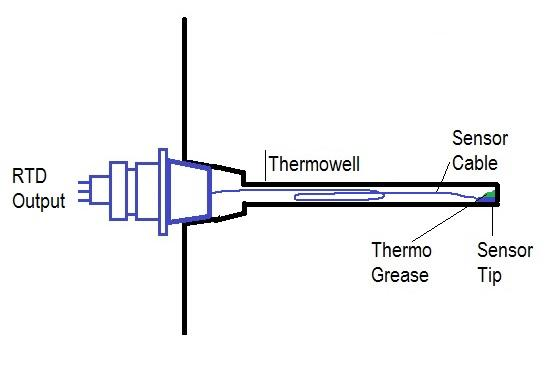
A thermowell is a protective tube installed into a process vessel, pipe, or tank. The temperature sensor is inserted into the thermowell rather than being directly exposed to the process fluid.
The thermowell creates a barrier between the sensor and the process.
Depending on the application, thermowells can be manufactured from materials such as 316 stainless steel and configured with different process connections, including threaded, flanged, welded, and sanitary connections.
For sanitary applications, Tri-Clamp thermowells are commonly used because they provide a hygienic connection suitable for applications where cleanliness and easy disassembly are important.
Why Are Thermowells Important?
1. They Protect Temperature Sensors
One of the primary purposes of a thermowell is to protect the temperature sensor from harsh process conditions.
Without a thermowell, an RTD or thermocouple may be directly exposed to:
High temperatures
Pressure
Flowing liquids and gases
Corrosive fluids
Chemical exposure
Mechanical damage
Cleaning processes
A properly selected thermowell helps shield the sensor from these conditions and can significantly improve the reliability of the temperature measurement system.
2. They Make Sensor Replacement Easier
Another major advantage is that a thermowell can allow the temperature sensor to be removed without opening the process connection.
For example, an RTD installed directly into a pressurized process may require the process to be shut down before the sensor can be removed.
With a properly installed thermowell, the sensor can often be removed from the thermowell while the thermowell remains installed.
This can make maintenance and sensor replacement significantly easier.
3. They Reduce Maintenance Downtime
Temperature sensors may eventually require replacement, inspection, or calibration.
A thermowell can remain permanently installed while the sensor is serviced or replaced.
This can be especially valuable in industrial and manufacturing environments where unnecessary process downtime can be expensive.
For facilities that regularly maintain temperature instrumentation, this can simplify maintenance procedures and reduce interruptions to production.
4. They Help Protect Sensors During Cleaning
In food, beverage, pharmaceutical, and other sanitary applications, equipment may undergo frequent cleaning procedures.
Processes such as Clean-in-Place (CIP) and Sterilize-in-Place (SIP) can expose temperature instrumentation to demanding conditions.
A properly designed sanitary thermowell can provide additional protection for the temperature sensor while maintaining an appropriate hygienic process connection.
The thermowell material, surface finish, dimensions, and connection should be selected according to the specific application and applicable sanitary requirements.
5. They Can Improve the Reliability of Temperature Measurement
A thermowell is not simply a protective cover. Its design can also influence temperature measurement performance.
The thermowell needs to transfer heat from the process to the temperature sensor.
If the thermowell is incorrectly sized or designed, it can increase the response time of the temperature sensor.
For this reason, factors such as the thermowell's:
Material
Insertion length
Diameter
Wall thickness
Sensor fit
Process temperature
Process pressure
Process flow
should all be considered when selecting a thermowell.
Thermowell vs. Direct-Mount Temperature Sensor
A direct-mount temperature sensor is exposed directly to the process.
This can provide fast temperature response because there is less material between the process and the sensing element.
However, the sensor is also exposed to the process environment.
A thermowell provides an additional protective barrier.
Feature | Direct-Mount Sensor | Sensor with Thermowell |
Sensor protection | Lower | Higher |
Sensor replacement | May require process shutdown | Often easier |
Maintenance | More difficult in some applications | Easier |
Response time | Generally faster | May be slightly slower |
Process exposure | Direct | Sensor protected |
Suitable for harsh environments | Application dependent | Often preferred |
The correct choice depends on the application. A thermowell should not automatically be added to every temperature measurement system.
Thermowells for RTD Temperature Sensors
RTDs, including Pt100 and Pt1000 sensors, are widely used for accurate temperature measurement.
A thermowell can be used with an RTD to protect the sensing element from the process.
For example, a 316 stainless steel thermowell paired with a Pt1000 RTD can be used for temperature measurement in applications where the sensor needs protection from the process.
The RTD and thermowell should be properly matched to ensure good sensor contact and appropriate measurement performance.
Sanitary Thermowells
Sanitary applications have additional requirements compared with conventional industrial temperature measurement.
Applications in the food, beverage, dairy, biotechnology, and pharmaceutical industries may require hygienic designs that minimize areas where product residue or contaminants could accumulate.
Sanitary thermowells are commonly available with Tri-Clamp connections, making them suitable for systems designed around sanitary piping.
When selecting a sanitary thermowell, important considerations can include:
Process connection size
Thermowell material
Insertion length
Temperature range
Pressure rating
Surface finish
Sensor compatibility
Sanitary requirements
Cleaning and sterilization conditions
How to Choose the Right Thermowell
Selecting the correct thermowell requires more than simply choosing a diameter and connection size.
Consider the Process Temperature
The thermowell material and sensor need to be compatible with the expected operating temperature.
Consider Process Pressure
The thermowell must be capable of withstanding the pressure of the process.
Consider Flow Velocity
High process flow can create mechanical forces on the thermowell. In some applications, thermowell design must account for vibration and mechanical stresses caused by fluid flow.
Consider the Material
316 stainless steel is commonly used for many sanitary and industrial applications because of its corrosion resistance and suitability for a wide range of environments.
However, the appropriate material depends on the specific process and chemical exposure.
Consider the Sensor
The thermowell's internal dimensions should be compatible with the temperature sensor being used.
A proper fit can help provide effective heat transfer between the thermowell and sensor.

Why Thermowell Selection Matters
A thermowell is a relatively small component, but it can have an important role in the overall temperature measurement system.
An incorrectly selected thermowell can contribute to:
Slow temperature response
Poor sensor fit
Mechanical failure
Measurement errors
Increased maintenance requirements
Compatibility problems
Proper selection helps ensure that the temperature sensor is protected while still providing reliable temperature measurement.
Final Thoughts
Thermowells provide an important layer of protection between temperature sensors and the process environment.
For applications involving RTDs, thermocouples, industrial equipment, sanitary processing, or demanding temperature measurement environments, a properly selected thermowell can improve sensor protection, simplify maintenance, and help extend the useful life of temperature instrumentation.
However, the thermowell should always be selected based on the actual process conditions rather than simply choosing a standard size.
If you are selecting a thermowell for a specific application, consider the temperature, pressure, process fluid, flow conditions, connection type, sensor dimensions, and required sanitary specifications before making a selection.
Looking for Temperature Measurement Components?
Zedqo provides temperature measurement and instrumentation products for industrial and laboratory applications, including RTD temperature sensors and thermowell solutions.
Contact Zedqo to discuss the appropriate temperature measurement configuration for your application.

Comments